Knee cartilage and joint-preservation treatments
St. Luke’s Hospital discusses two cartilage-focused treatments for selected knee conditions, alongside arthroscopic surgery and structured rehabilitation. Which approach is appropriate, or whether either applies at all, is decided case by case after imaging and an orthopedic assessment.

The two treatments we discuss most often
Both are considered for cartilage damage in the knee, but they are different categories of treatment, are prepared differently, and are approved for different situations.
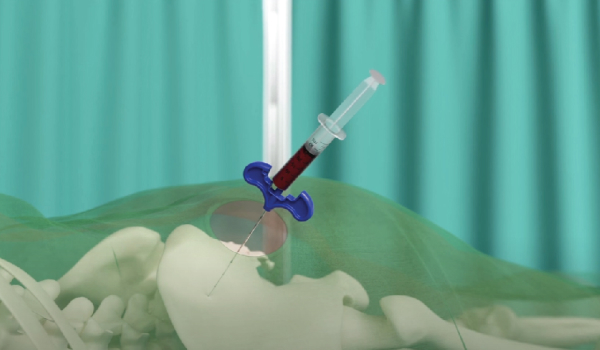
Bone marrow injection
Bone Marrow Aspirate Concentrate (BMAC) is prepared from your own bone marrow during a same-day procedure and injected into the knee. It is considered for selected knee osteoarthritis and cartilage-related conditions after individual assessment. It is a bone marrow concentrate, not a stem cell product, and we do not describe it as proven stem cell therapy.
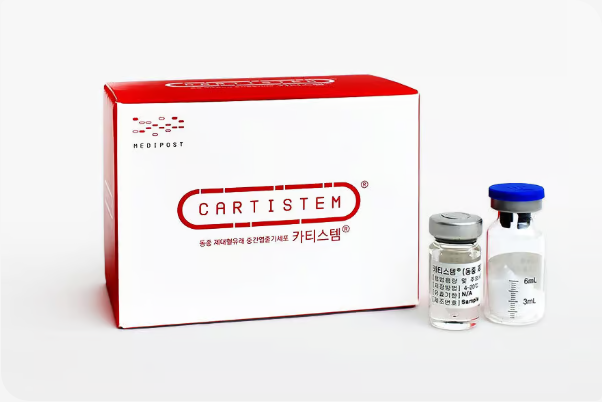
CARTISTEM® cartilage repair
CARTISTEM® is a cell-based treatment that may be considered for selected patients with knee cartilage damage or osteoarthritis, and is applied during arthroscopic surgery. It is approved for specific uses in South Korea. It is not approved by the U.S. Food and Drug Administration for commercial use; a Phase 3 pivotal trial is currently recruiting participants at sites in the United States.
At a glance
The quickest way to see the difference is to put the two side by side.
| Bone marrow injection | CARTISTEM® | |
|---|---|---|
| Type | Bone marrow concentrate | Cell-based cartilage treatment |
| Method | Minimally invasive injection | Arthroscopic surgery |
| Source | Your own bone marrow | Umbilical cord blood–derived stem cells |
| Best for | Selected joint conditions after medical review | Selected focal knee cartilage conditions after medical review |
| Anesthesia | Local anesthesia | Required for surgery |
| Recovery | Walk the next day may be possible, depending on your plan | Return to daily activities in about 12 weeks, varying by procedure and rehabilitation plan |
| Regulatory status | Performed with MFDS-approved BMC kits | Approved for specific uses in South Korea; not approved by the U.S. Food and Drug Administration for commercial use, with a Phase 3 pivotal trial recruiting at sites in the United States |
This table is a general orientation, not a recommendation. Recovery in particular varies with the individual, the extent of cartilage damage and the rehabilitation plan.
How the two approaches differ
Beyond the table, the practical difference is what kind of knee problem each is intended for.
Bone marrow injection is an injection-based procedure performed on the same day, and is usually discussed for osteoarthritis where the joint surface is worn rather than focally damaged. CARTISTEM® is applied during arthroscopic surgery and is discussed for selected focal knee cartilage conditions. A fuller side-by-side comparison, including hospital stay and the questions worth asking, is on the comparison page.
What the published evidence does and does not show
The two treatments do not sit at the same level of evidence, and we think it is more useful to say so plainly than to present them as equivalent.
For bone marrow injection, systematic reviews of randomized trials report improvement compared with a patient’s own baseline, but have not established superiority over placebo or platelet-rich plasma injections. For CARTISTEM®, a multicenter phase 3 randomized trial in Korea compared it with microfracture and reported better cartilage repair grades at 48 weeks, with follow-up published to five years. Neither finding predicts an individual result, and both need to be read together with their limitations.
How suitability is decided
Nothing is recommended before your imaging and history have been reviewed by an orthopedic specialist.
- You send your MRI and a short history. An orthopedic specialist reviews what the images actually show.
- You receive an assessment in English explaining which options may be worth discussing, which are unlikely to apply, and why.
- If you decide to travel, imaging and consultation take place at the hospital before anything is scheduled, and the plan can change based on what is found.
- Rehabilitation and follow-up after you return home are planned as part of the same course of care.