BMAC for Knee Osteoarthritis in Korea
Bone Marrow Aspirate Concentrate (BMAC) is a treatment option that uses a concentrated component of your own bone marrow. It is considered for selected knee osteoarthritis and cartilage-related conditions after individual assessment.
Request a preliminary reviewBone marrow injection?
Video: “Autologous Bone Marrow Stem Cell Therapy! Cartilage regeneration? What is it?” — St. Luke’s Hospital
Delayed Osteoarthritis Progression

Rapid Pain Relief through Inflammation reduction

Cartilage Regeneration Effect
Short Hospital Stay (Walking Possible the Next Day)

Cost-Effective

No General Anesthesia or Incisions Needed – Quick Return to Daily Activities with Injection Therapy
This video provides general information only. Individual treatment decisions require an orthopedic assessment and a discussion of benefits, risks, limitations, alternatives, and expected recovery.
Assessment first, then an individualized discussion.
Bone marrow is collected from the pelvic bone, processed to create a concentrated aspirate, and prepared for an intra-articular injection when clinically appropriate. Symptoms, imaging, history, and treatment goals guide whether a bone marrow injection should be considered.
Suitability, potential benefits, limitations, risks, and alternatives require consultation with an orthopedic specialist.
What the assessment reviews
Knee symptoms
Persistent pain, reduced function, or activity limitation should be evaluated with your overall condition in mind.
Imaging findings
X-ray and MRI findings may help clarify osteoarthritis severity, cartilage status, and other joint changes. Imaging is performed on site and interpreted by a radiologist based at the hospital, and our MRI runs SwiftMR, an AI image-reconstruction software by AIRS Medical cleared by the U.S. Food and Drug Administration. For a knee study the manufacturer reports a scan time of about 1 minute 36 seconds instead of 2 minutes 42 seconds. The software shortens the scan; the images are still read by a radiologist, not by software.
Other options
Rehabilitation, medications, injections, surgery, and other options may also be discussed where appropriate.
Bone marrow injection, step by step
Photographs are of the procedure as performed at our Joint Center.
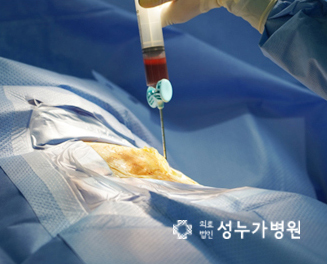 Bone marrow stem cell extraction from the patient’s anterior superior iliac spine
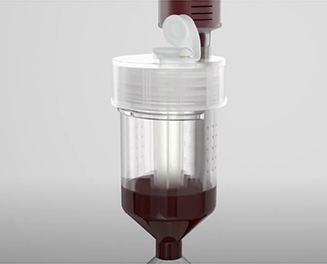 Transfer the extracted bone marrow into a kit
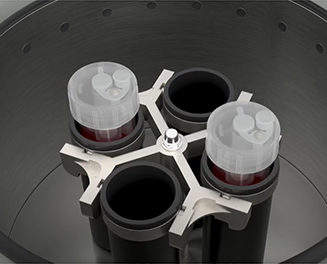 Centrifugation for separation
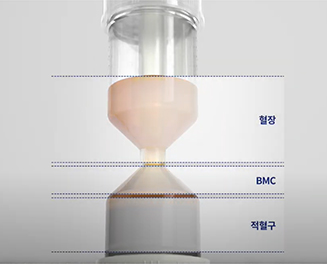 Removal of separated bone marrow plasma
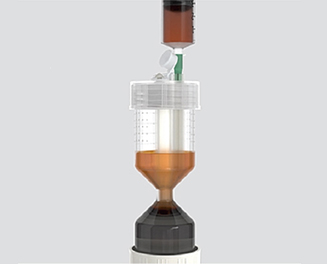 Extraction of bone marrow aspirate concentrate containing bone marrow cells
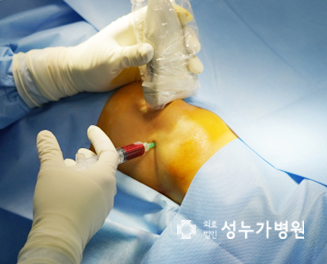 Injection of the concentrated bone marrow aspirate containing a large number of bone marrow cells into the knee joint cavity
Assessment, procedure, and follow-up by one orthopedic team.
A bone marrow injection is one option within a wider joint-preservation program. What usually decides the outcome of a visit is not the injection itself but the assessment that leads to the decision, the team performing the procedure, and the follow-up that comes after. All three are handled within our Joint Center in Seoul.
Performed by orthopedic specialists
The assessment, the bone marrow harvest and the injection are carried out by orthopedic specialists at our Joint Center, from the first review of your imaging through to the procedure itself. The specialists practising here have performed more than 10,000 orthopedic procedures in total, including their work at previous institutions.
Prepared in the operating room
Bone marrow is aspirated and concentrated on site during the same session. Nothing is sent away to be grown in a laboratory, which is what separates this procedure from culture-expanded cell therapies.
Imaging read in house
Our MRI is on site and read by a radiologist based at the hospital, so imaging, reading and the consultation can take place on the same visit rather than across separate appointments.
Rehabilitation and follow-up
Activity guidance and follow-up are planned with the same team. International patients can continue follow-up online after returning home where this is appropriate.
The procedure count is taken from this hospital’s electronic medical records for the period 8 December 2023 to 4 September 2026. The 10,000+ figure refers to orthopedic procedures — including arthroscopic procedures, joint replacement and fracture surgery — performed by the orthopedic specialists currently practising at our Joint Center, including procedures carried out at previous institutions, based on their professional records. Follow-up intervals refer to cases treated at this hospital. These figures are provided for general information and do not predict the outcome of any individual treatment.
Research can inform the conversation.
Published studies have examined bone marrow concentrate approaches for knee osteoarthritis. Evidence quality, protocols, patient selection, and follow-up differ across studies. We review available evidence alongside your individual clinical findings.
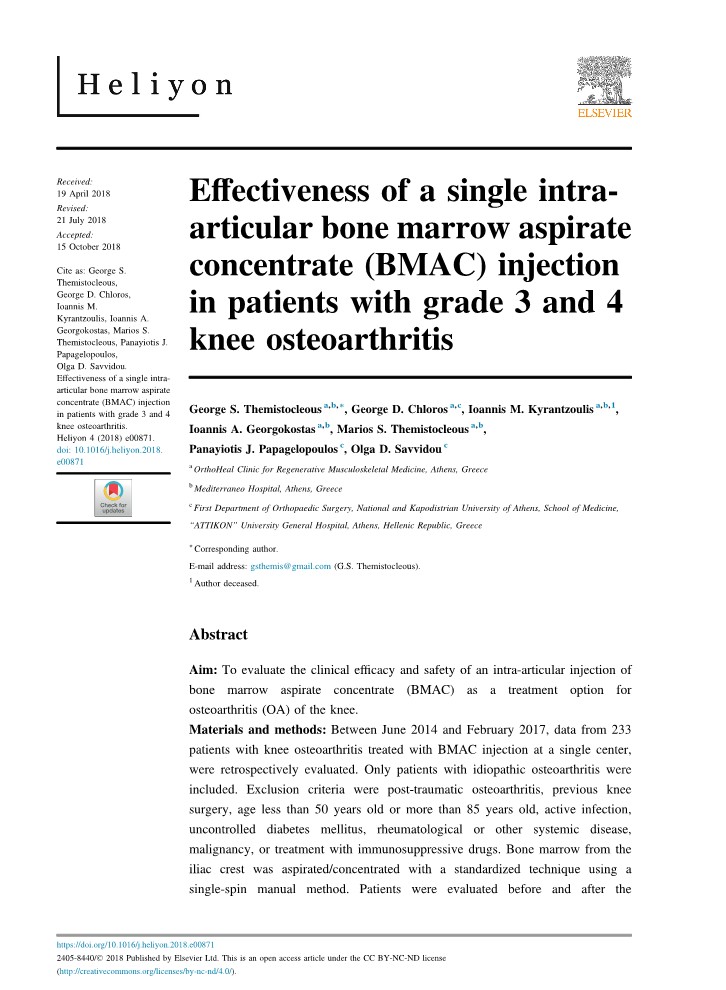
SCI-grade Published Researchon Autologous Bone Marrow Aspirate Concentrate Injection Therapy
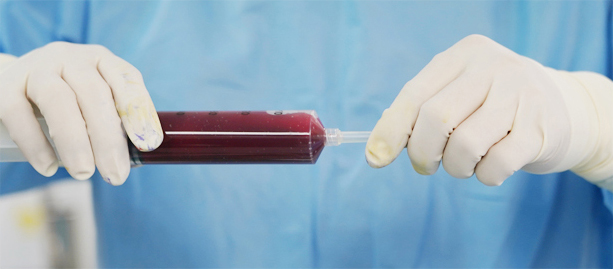


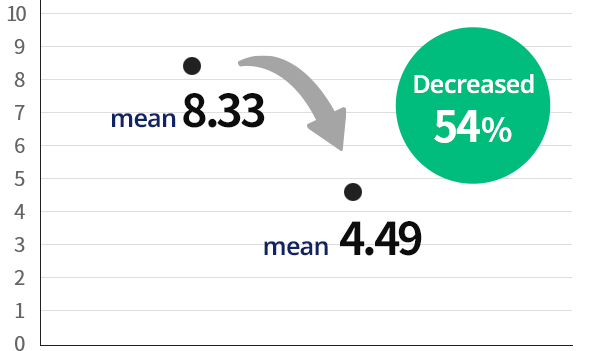
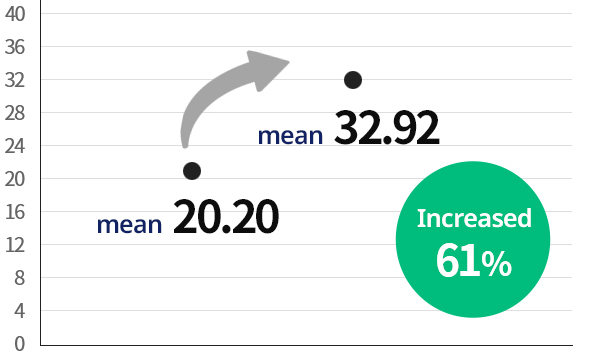
* Source : Themistocleous GS, Chloros GD, Kyrantzoulis IM, Georgokostas IA, Themistocleous MS, Papagelopoulos PJ, Savvidou OD. Effectiveness of a single intra-articular bone marrow aspirate concentrate (BMAC) injection in patients with grade 3 and 4 knee osteoarthritis. Heliyon. 2018 Oct 18;4(10):e00871. doi: 10.1016/j.heliyon.2018.e00871. PMID: 30364761; PMCID: PMC6197942. Full text: open access via PubMed Central.
Cartilage measurements reported in a published phase I/II study
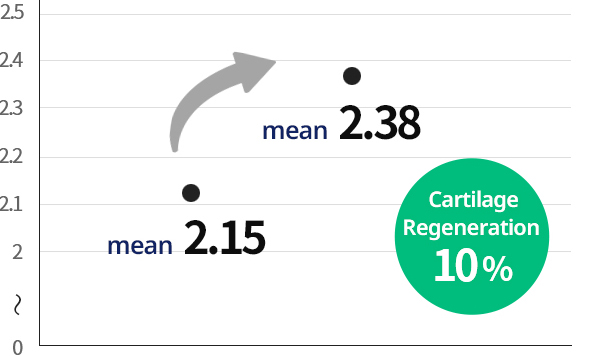
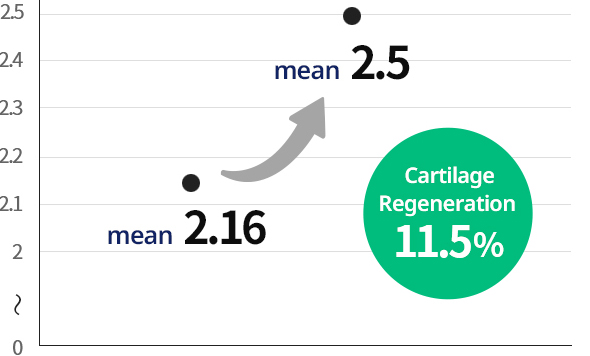
* Source : Al-Najar M, Khalil H, Al-Ajlouni J, Al-Antary E, Hamdan M, Rahmeh R, Alhattab D, Samara O, Yasin M, Abdullah AA, Al-Jabbari E, Hmaid D, Jafar H, Awidi A. Intra-articular injection of expanded autologous bone marrow mesenchymal cells in moderate and severe knee osteoarthritis is safe: a phase I/II study. J Orthop Surg Res. 2017 Dec 12;12(1):190. doi: 10.1186/s13018-017-0689-6. PMID: 29233163; PMCID: PMC5727956.
Note on this source: the phase I/II study above used culture-expanded bone marrow mesenchymal cells, a laboratory-grown preparation. This is not the same as the same-day bone marrow concentrate described on this page. It is shown as related evidence on cartilage findings, not as a study of the identical treatment.
One cited series evaluated a single intra-articular bone marrow concentrate injection in 121 knees with grade 3–4 knee osteoarthritis (mean follow-up 11 months; range 6–30 months). Another phase I/II study reported cartilage-thickness observations at 12 months after autologous bone-marrow cell treatment. Study findings have limitations and do not predict an individual outcome.
Already have an MRI or X-ray?Our orthopedic team can review your images and records before you travel, and tell you what a visit would involve.
Send your MRI for a medical reviewOne patient’s knee MRI, two years apart
The two studies below are from the same patient, taken before treatment and again two years later, and are published with that patient’s consent. Both were acquired on the same 1.5T MRI system at St. Luke’s Hospital, reconstructed with SwiftMR (AIRS Medical).
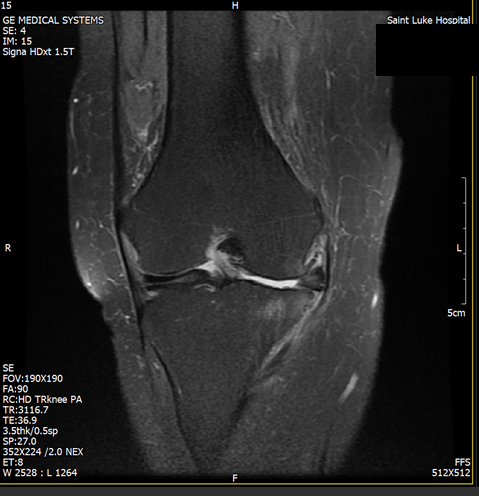
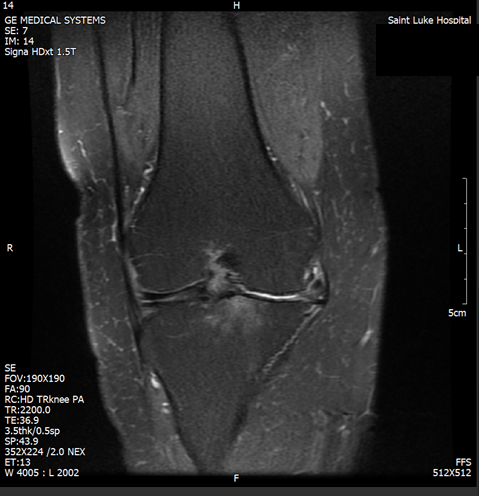
Shaded in gold: the bright, high-signal area at the joint line, outlined the same way on both studies. Move your cursor over an image to magnify it — on a touch screen, press and hold.
How the treating team read these images
- The abnormally bright space between the joint surfaces is reduced compared with the earlier study.
- The area where cartilage had been lost appears filled in on the later study.
- The change was still visible on imaging at the two-year point.
This is the imaging of a single patient, published with consent and with identifying details removed. It shows one individual’s course and does not represent a typical or expected result. Outcomes differ between patients, side effects such as pain or swelling can occur, and any treatment decision requires an in-person assessment by an orthopedic specialist.
Who Benefits from This Therapy?
Kellgren–Lawrence (KL) grading of knee osteoarthritis
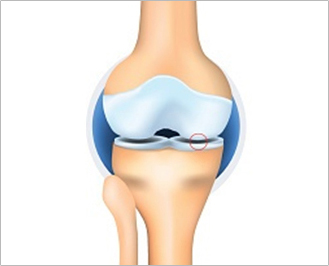
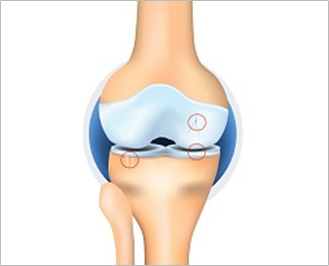
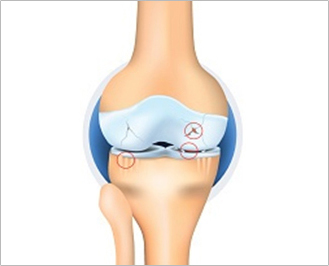
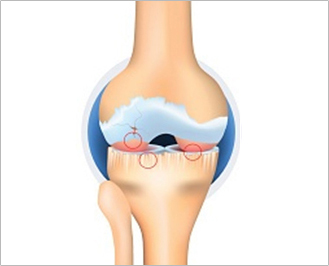
Patients with degenerative osteoarthritis showing joint space narrowing, bone spurs, or bone deformities (KL grades 2–3)
Patients with cartilage damage exceeding 50% or with progressing calcification (ICRS grades 3–4)
Suitability is confirmed only after an orthopedic assessment that reviews symptoms, imaging findings, and overall condition.
Only MFDS-approved BMC kits are used
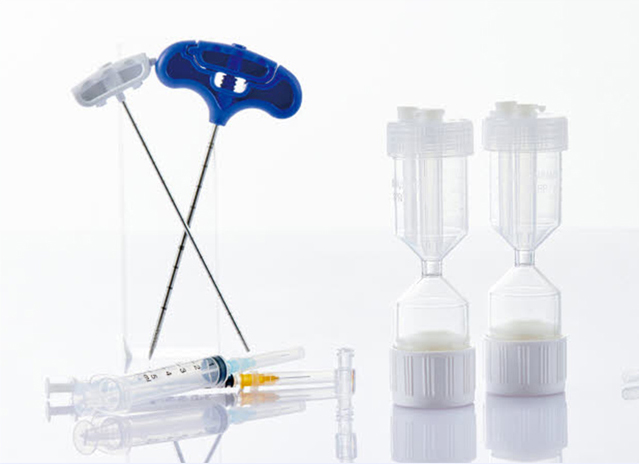
BMC-S30 SET
Effective way to get BMC
- Proven by Research Studies· Clinical Trials done in Europe using proprietary products
- Extraordinary Quality· Manufactured and sourced in PRP specializing company· KGMP, MFDS
- Effective and Efficient Bone Marrow Concentrate separation· Bone Marrow Aspirate Concentrate isolation within 5 min· Adjustable dosage with ease, depending on the usage environment
Manufacturer : Prodizen (PROSYS Global), Seoul, Republic of Korea. prosysglobal.com
Total Cell from Bone Marrow Analysis
Relative values, bone marrow = 1
| Bone Marrow | BMC-S30 | |
|---|---|---|
| EGF | 1 | 16.4 |
| CD24(+) | 1 | 5.82 |
| TNC | 1 | 4.345 |
| TGF-B1 | 1 | 2.595 |
| VEGF | 1 | 1.7 |
- EGF (Epidermal Growth Factor) : Cell proliferation stimulation, promotion of skin graft wound healing
- CD24(+) (Stem Cell Labeling Factor) : Produce all blood cells
- TNC (Total Nucleated Cells) : A cell with red blood cells removed
- TGF-B1 (Cellular Functional Dermal Protein) : Promote wound healing, proliferate epithelial and intravascular cells
- VEGF (Vascular Endothelial Growth Factor) : Proliferative endothelial cells, neovascularization
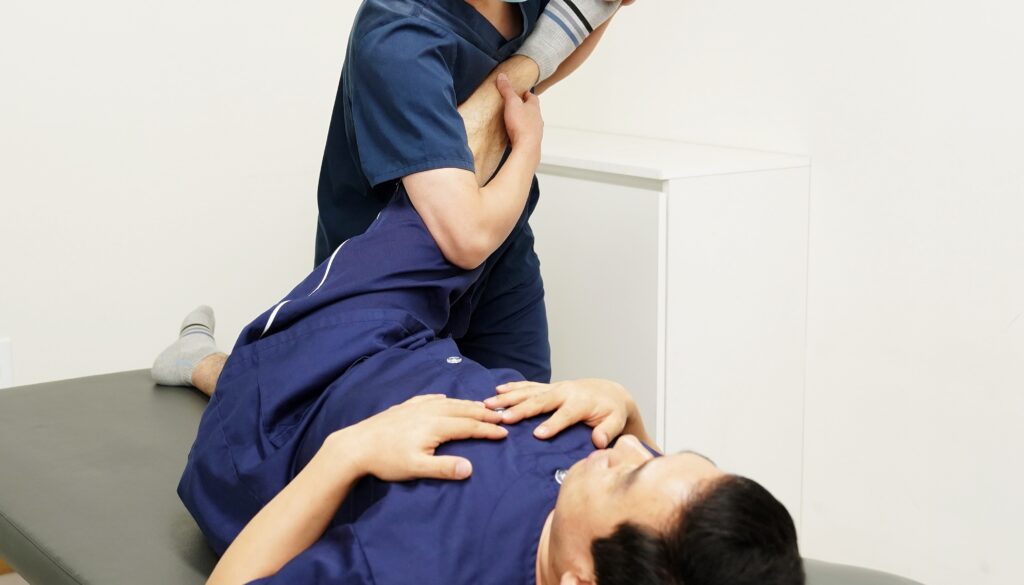
Recovery planning matters.
Recommended activity, rehabilitation, and follow-up depend on the procedure and your response. International patients can receive help with appointment coordination, English interpretation, medical-record support, and online follow-up after returning home when appropriate.
International patient supportRehabilitation can include posture, muscle-strengthening and therapeutic exercise plans tailored to the procedure and clinical progress.
Treatment considerations
A bone marrow injection may be discussed only after an individual orthopedic assessment. Benefits, risks, limitations, alternatives, recovery needs, and available evidence should be reviewed in the context of your symptoms, imaging, and medical history. Results may vary by patient and are not guaranteed.
Preparing, recovery and FAQ
Before your visit
Bring recent MRI or X-ray images, written reports, a medication list, and a short history of symptoms and previous treatments.
What happens on the day?
The clinical team confirms the treatment plan, explains the procedure, and provides post-procedure instructions. The exact process is individualized.
When can I return to activity?
Recovery recommendations depend on the treated joint, procedure details, symptoms, and rehabilitation plan. Follow the clinician’s instructions rather than a general timetable.
Can a bone marrow injection replace surgery?
Not necessarily. A bone marrow injection, rehabilitation, medication, surgery, and other options are considered according to the diagnosis and individual goals.
Reference and review note · This general information should be read with current clinical evidence and an orthopedic assessment. It is not a guarantee of individual results.
Reviews of the hospital
2,360 public patient reviews on Google, Naver and Kakao Map
These reviews are about the hospital as a whole, not about this treatment. Figures as of 7 September 2026, counted on each platform. Naver lists visitor reviews and rated reviews as two separate sets on the same page, and both are included here. Review volume and platform ratings describe how patients rated their overall experience. They are not a measure of treatment outcomes, which differ between individuals.