There is often more to try before a knee replacement.
Advanced cartilage restoration, joint-preservation surgery, and rehabilitation for patients considering BMAC or CARTISTEM® treatment in Korea.
Send your MRI for reviewTreatment options
You may have more options than you think
Before considering knee replacement, it helps to understand what is causing your pain — and which options may still be appropriate. At St. Luke’s Hospital the orthopedic team reviews your symptoms, imaging, knee alignment, cartilage condition, and treatment goals before discussing any single procedure.
- 01
Preserve
Support the joint and manage symptoms with rehabilitation, activity guidance, medication, or injection-based care when appropriate.
- 02
Repair
Address specific problems such as cartilage defects, meniscus injury, instability, or alignment-related stress.
- 03
Biologic and cartilage-focused care
Consider selected options, including BMAC or CARTISTEM®, only when your imaging and orthopedic assessment support that discussion.
- 04
Replace
When arthritis is advanced and joint-preserving options are unlikely to address the main problem, joint replacement may be considered.
Every knee is different. A medical review can help clarify which options may be appropriate before you travel to Korea.
Care begins with a clear review of your condition.
Our orthopedic team reviews your symptoms, medical history, and imaging to discuss appropriate options. International patient support can coordinate appointments, diagnostic testing, English interpretation, medical-record assistance, and online follow-up after you return home.

CARTISTEM
Learn about cartilage-focused treatment considerations for selected knee conditions, including potential benefits, limitations, and evaluation.
Explore CARTISTEM →
Bone Marrow Injection
Understand Bone Marrow Aspirate Concentrate (BMAC), a treatment option that may be considered as part of an individualized plan.
Explore bone marrow injection →
Clinical Evidence
See how current research informs clinical discussion and why every recommendation requires individual assessment.
Read the evidence →At a glance
What St. Luke’s Hospital offers international patients
St. Luke’s Hospital is an orthopedic hospital in Eunpyeong-gu, Seoul, Korea, treating international patients with knee cartilage damage and knee osteoarthritis. Assessment, MRI, treatment and rehabilitation are carried out by one orthopedic team on a single site, with a radiologist and an anesthesiologist based at the hospital, and English-language coordination throughout.
- Where
- Eunpyeong-gu, Seoul, Korea — Bulgwang Station, Exit 1
- Focus
- Joint-preserving orthopedic care for knee cartilage damage and knee osteoarthritis
- Imaging
- MRI performed on site and read by a radiologist based at the hospital
- Anesthesia
- Provided by an anesthesiologist based at the hospital for surgical procedures
- Options discussed
- Rehabilitation and injection-based care, arthroscopic repair, biologic and cartilage-focused options including BMAC and CARTISTEM®, and joint replacement
- Typical stay
- About two weeks for a bone marrow injection; about four weeks for CARTISTEM®
- First step
- Send your MRI or X-ray for a medical review — the team replies within three business days
- Medically reviewed by
- Yeong seok Lee, M.D., Ph.D., Orthopedic Surgery
A summary of the pages on this site. Suitability, expected benefit, limitations, risks and alternatives are decided individually after an orthopedic assessment.
The joint you were born with is worth protecting.
That belief shapes every treatment we recommend.
Our promise to you · St. Luke’s Hospital
A Smart Choice!
St. Luke’s Hospital
Experience Built in the Field.
Trusted Medical Team.
St. Luke’s Hospital brings orthopedic diagnosis, treatment planning, and rehabilitation together in Seoul for patients seeking a clear next step.
Seoul National University · Samsung Medical Center · Kyung Hee University

visits · Since 2016
[October 2026]
reviews · Since 2016
[October 2026]
Read on site by a radiologist based at the hospital, on a GE 1.5T MRI system.
From treatment planning through rehabilitation-focused follow-up.

In-house MRI Service
MRI is performed on site on a GE 1.5T system running SwiftMR, an AI image-reconstruction software cleared by the U.S. Food and Drug Administration. For a knee study, the manufacturer reports a scan time of about 1 minute 36 seconds instead of 2 minutes 42 seconds — roughly 42% shorter.
The software shortens the scan; it does not interpret the images. Every study is read by a radiologist based at the hospital, so imaging and the discussion with your orthopedic specialist can often be arranged within the same visit.
Patient care system from treatment to management
Specialized rehabilitation therapy is provided by experienced manual and physical therapists. Rehabilitation-focused inpatient wards are available when clinically appropriate.

One-stop care journey for international patients
From your first medical-record review to follow-up after returning home, St. Luke’s Hospital helps international patients understand and coordinate the next step in their care journey.

Share medical records
Send symptoms, treatment history, and available MRI or X-ray images for preliminary review.

Plan your visit
Coordinate appointments and diagnostic testing before your visit to Seoul.

In-person evaluation
Meet the orthopedic team with English interpretation support when needed.

Treatment discussion
Discuss appropriate options, benefits, limitations, risks, and alternatives after assessment.

Rehabilitation coordination
Connect treatment planning with rehabilitation support when clinically appropriate.

Online follow-up
Arrange follow-up after returning home when appropriate for your individual plan.
Images on this page are illustrations of the care process, not photographs of a specific patient or consultation.
When clinically needed, in-house MRI assessment, orthopedic treatment planning, and rehabilitation support can be coordinated as part of one care journey. International patients can also receive support with English medical records and online follow-up after returning home.
Patient reviews
2,820public patient reviews on Google, Naver and Kakao MapNaver and Kakao Map are the platforms Korean patients use most, and Google is where most international patients look. Every review stays on the platform that hosts it, open to anyone — none of them are chosen or filtered by us.
Figures as of 23 October 2026 (Naver: 2,117 on the hospital’s main listing plus 380 on three centers that Naver lists separately — Spine and Joint Center 139, Daytime Trauma Center 125, Health Screening Center 116), counted on each platform. Naver lists visitor reviews and rated reviews as two separate sets on the same page, and both are included here. Review volume and platform ratings describe how patients rated their overall experience. They are not a measure of treatment outcomes, which differ between individuals.
What patients say
Real stories, real patients
Two patients describe their knee problem, the treatment they had, and how the months afterwards went.
Bone marrow injection
Adam’s testimonial
- 38-year-old male, Stage 2 degenerative osteoarthritis, British
- Suffered from knee pain for 20 years
- Able to walk freely after treatment
CARTISTEM®
Son Hyun Soo’s testimonial
- 56-year-old female, Grade 3 degenerative osteoarthritis
- Treated with CARTISTEM®, applied surgically during arthroscopy
- Severe knee pain before treatment
These are individual accounts recorded with each patient’s consent. Recovery differs from person to person, and an interview is not a promise of any particular outcome.
Ready to see what applies to your own knee?
Send your MRI or X-ray. An orthopedic specialist reads your records and the international patient team replies within three business days.
Request a medical review →Yeong seok Lee
M.D., Ph.D.
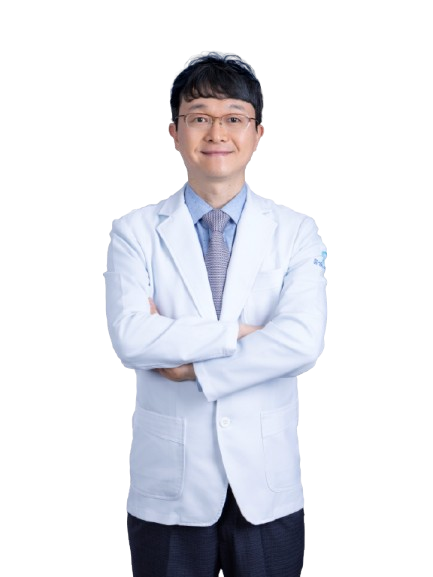
Orthopedic specialist from Samsung Medical Center
Specialties
Stem cell therapy, knee replacement surgery, shoulder and knee arthroscopy, rotator cuff tear, and frozen shoulder.
Knee and shoulder care, from first assessment through rehabilitation
- Consultations can be conducted in English directly with the specialist, with interpretation support also available
- Over 15 years across diagnosis, non-surgical treatment, surgery and rehabilitation
- Clinical Professor, Sungkyunkwan University School of Medicine (Samsung Medical Center)
Health column
Helpful orthopedic information

When is knee alignment correction considered for osteoarthritis?
Alignment correction, most often a high tibial osteotomy, is considered when a bow-legged knee is overloading and wearing out its inner side while the outer side…

What happens during CARTISTEM® surgery and recovery?
CARTISTEM® is applied to a full-thickness cartilage defect during knee surgery, after the defect has been confirmed and prepared. Recovery is measured in months rather than…
Helpful guides and updates from St. Luke’s Hospital
What treatment in Korea costs
What decides the cost of knee treatment in Korea, why no price list is published, and how to get an individual estimate after a specialist reviews…
Prepare a clearer starting point.
- Include MRI or X-ray images when available.
- Share your current symptoms and previous treatment history.
- Attach English medical records or a translated summary when available.
Questions international patients often ask.
Can I send MRI or X-ray images before visiting?
Yes. You can share available imaging and medical records when requesting a medical review.
Is a bone marrow injection or CARTISTEM® suitable for every patient?
No. Suitability depends on an individual orthopedic assessment, symptoms, imaging, and overall clinical context.
How are treatment costs provided?
Costs are not listed publicly and are provided individually after medical review and discussion of appropriate options.
What support is available after I return home?
Online follow-up may be arranged when appropriate. English medical records and certificates can also be supported when needed.
Practical guides for international patients
How long to plan for, what decides the cost, which visa applies, how to reach us from the airport, and how care continues after you fly home.
What the international patient team helps with
Support for communication during your visit.
Help coordinating your consultation and testing schedule.
Support for issuing English medical documents when needed.
Follow-up can be arranged when appropriate for your plan.
Inquiry about medical consultations
and appointments
For more accurate information, please attach consultation documents or share details about your symptoms.
If you have questions about your condition or would like to schedule an appointment, please leave your email address.
We will review your inquiry and respond as soon as possible.
For online inquiries
international@slmc.co.kr
Hospital Hours
- Monday to Friday
- AM 09:00 ~ PM 09:00
- Lunch hour
- PM 01:00 ~ PM 02:00
- Saturday
- AM 09:00 ~ PM 03:00
- Sunday & Holidays
- AM 10:00 ~ PM 05:00
*No lunch break on Saturdays, Sundays, and holidays.
Getting to St. Luke’s Hospital
726, Tongil-ro, Eunpyeong-gu, Seoul, Republic of Korea
Bulgwang Station (Lines 3 & 6), Exit 1
[Subway]
Board the Airport Railroad (AREX) at Airport Terminal 1 ▶ Transfer to Line 6 at Digital Media City Station ▶ Get off at Bulgwang Station (Line 6) ▶ Go out Exit 1 and walk straight for 1 minute.
[Taxi]
The distance from Incheon Airport to St. Luke’s Hospital in Eunpyeong is approximately 56 km. The estimated travel time is around 50 minutes to 1 hour, but this may vary depending on traffic conditions.