CARTISTEM® Cartilage Restoration in Korea
CARTISTEM® is a cell-based treatment that may be considered for selected patients with knee cartilage damage or osteoarthritis after a detailed orthopedic assessment.
Assessment, arthroscopic surgery, and rehabilitation are provided by a single orthopedic team at St. Luke’s Hospital in Seoul, with English-language coordination for international patients.
Request a Medical Review →At St. Luke’s Hospital, treatment decisions are based on your symptoms, physical examination, imaging, cartilage condition, alignment, overall knee health, and treatment goals. CARTISTEM® is not suitable for every patient.
What is CARTISTEM®?
CARTISTEM® is an allogeneic human umbilical cord blood-derived mesenchymal stem cell product used in Korea for selected knee cartilage conditions.
According to the Korean product information, it is indicated for repetitive and/or traumatic cartilage degeneration, including degenerative osteoarthritis, with an ICRS Grade IV cartilage defect.
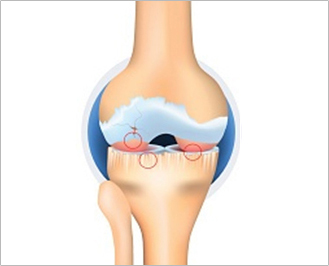
An ICRS Grade IV defect is the most severe cartilage-defect grade, meaning that cartilage is no longer visible in the affected area. This classification is only one part of the evaluation; treatment decisions require a full orthopedic assessment.
Manufacturer : MEDIPOST Co., Ltd., Republic of Korea. en.medi-post.co.kr
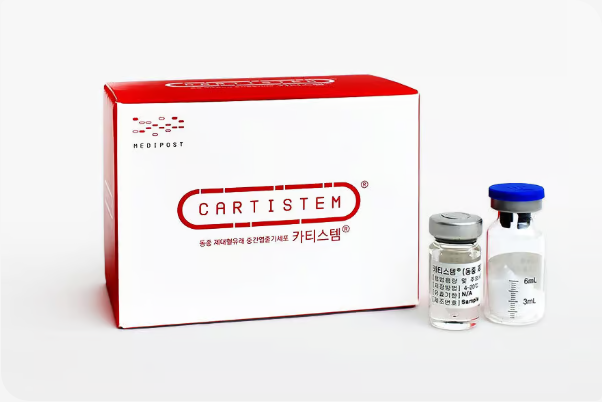
When might CARTISTEM® be considered?
CARTISTEM® may be discussed when a patient has:
- A focal or extensive knee cartilage defect
- Degenerative or trauma-related cartilage damage
- Osteoarthritis with an ICRS Grade IV cartilage defect
- Symptoms that continue despite appropriate non-surgical care
- Imaging and clinical findings that support a cartilage-focused treatment discussion
Age alone does not determine suitability. Alignment, joint stability, osteoarthritis severity, meniscus condition, ligament status, activity needs, and general health may all affect the treatment plan.
Two different scales, measuring two different things
Patients are often told a grade without being told which scale it refers to. Two are commonly used, and they are not interchangeable.
Read from an X-ray. It describes how far osteoarthritis has progressed in the joint as a whole — joint-space narrowing, bone spurs and bone changes.
Assessed on MRI or during arthroscopy. It describes how deep the cartilage damage is at one specific site. Grade IV means cartilage is no longer visible in that area.
The two can therefore appear together: moderate osteoarthritis overall (KL grade 2–3) with a deep, focal cartilage defect (ICRS Grade IV) within it. Cartilage-focused treatment is generally discussed within that combination. Where osteoarthritis has reached end-stage (KL grade 4), joint-preserving options are usually no longer appropriate.
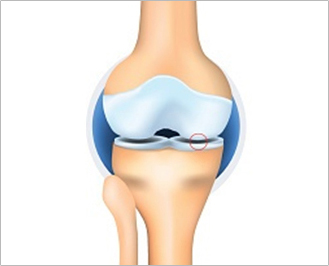
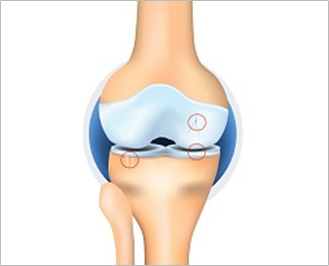
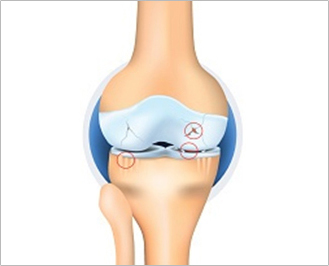
Kellgren–Lawrence grades 1 to 4, shown for general orientation. Grades 2 and 3 are highlighted because they are the range most often discussed for cartilage-focused treatment; this is not an eligibility criterion on its own. Your own grade is determined by your orthopedic specialist from your imaging.
How is it administered?
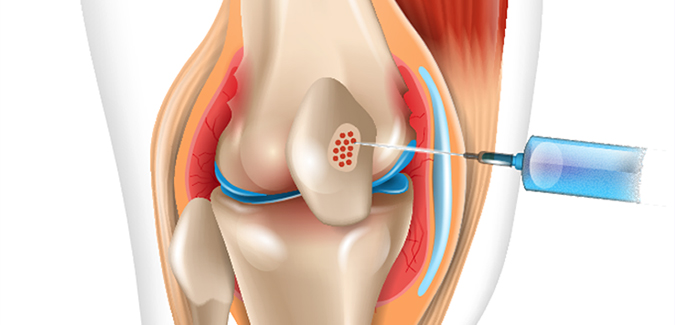
CARTISTEM® is administered surgically to the knee cartilage defect.
The manufacturer’s product information describes surgical administration at a dose based on the size of the cartilage defect. The exact surgical approach, recovery plan, and rehabilitation schedule must be determined by the treating orthopedic specialist.
At St. Luke’s Hospital, cartilage procedures are carried out arthroscopically by orthopedic specialists at our Joint Center. Arthroscopic access allows the surgeon to confirm the cartilage defect directly during the procedure and, where clinically appropriate, to address associated findings such as meniscus damage or alignment-related problems within the same treatment plan.
Assessment, surgery, and rehabilitation by one orthopedic team.
CARTISTEM® is one option within a wider joint-preservation program. For most patients, what matters is the assessment that leads to the decision, the team performing the procedure, and the rehabilitation that follows. All three are handled within our Joint Center in Seoul.
Performed by orthopedic specialists
Cartilage procedures at our Joint Center are performed by orthopedic specialists with dedicated experience in knee arthroscopy, from the diagnostic assessment through to the operation itself.
Assessment and treatment in one procedure
Arthroscopy allows the surgeon to view the cartilage surface directly, confirm the extent of the defect, and address associated findings such as meniscus damage within the same operative plan.
Minimally invasive access
Procedures are generally performed through small portals of around 5 mm. For suitable patients, this can support earlier mobilization and an earlier start to supervised rehabilitation.
Imaging interpreted by radiologists
MRI and X-ray are performed on site on a GE 1.5T system with FDA-cleared AI-assisted reconstruction, and are interpreted by a radiologist based at the hospital — so the cartilage assessment is reviewed by more than one clinical perspective before treatment is discussed.
Rehabilitation-focused inpatient care
A rehabilitation-focused ward and one-to-one sessions with manual and physical therapists are part of the treatment plan, together with a written program for patients continuing rehabilitation at home.
The full range of knee options
Non-surgical care, injection-based treatment, arthroscopic and cartilage procedures, osteotomy, and joint replacement are all available here. The discussion can therefore focus on what suits your knee rather than on a single treatment.
The procedure figure refers to the combined career experience in orthopedic surgery — including arthroscopic procedures, joint replacement and fracture surgery — of the orthopedic specialists currently practising at St. Luke’s Hospital’s Joint Center, including procedures performed at previous institutions, based on their professional records. Follow-up intervals refer to cases treated at this hospital. Both figures are provided for general information and do not predict the outcome of any individual treatment. Suitability for CARTISTEM® is determined only after an individual orthopedic assessment.

Clear imaging helps guide the discussion.
Symptoms and function
Pain pattern, swelling, daily function, and prior treatment help define the clinical problem.
X-ray and MRI
Imaging is performed on site and interpreted by a radiologist based at the hospital. X-ray and MRI help assess joint-space changes, cartilage condition, bone alignment, and associated meniscus or ligament injuries. Our MRI uses FDA-cleared AI-assisted reconstruction (SwiftMR), which the manufacturer reports can reduce scan time by up to 50% — helpful when a visit has to fit into a short trip.
Individual plan
Your orthopedic specialist discusses expected recovery, limitations, alternatives, and follow-up.
Review of imaging taken abroad
Where MRI or X-ray images have already been taken in your own country, our team can review them in advance and advise whether additional imaging is likely to be needed after you arrive.
What the software does, and what the radiologist does
Our MRI runs SwiftMR, an AI image-reconstruction software cleared by the U.S. Food and Drug Administration. It shortens the scan and improves image quality. It does not interpret your images.
Faster acquisition and improved image quality. For a knee study, the manufacturer reports a scan time of 1 minute 36 seconds compared with 2 minutes 42 seconds on the standard protocol — about 42% shorter.
Every study is read by a radiologist based at the hospital, and the findings are discussed with your orthopedic specialist. The interpretation is not automated.
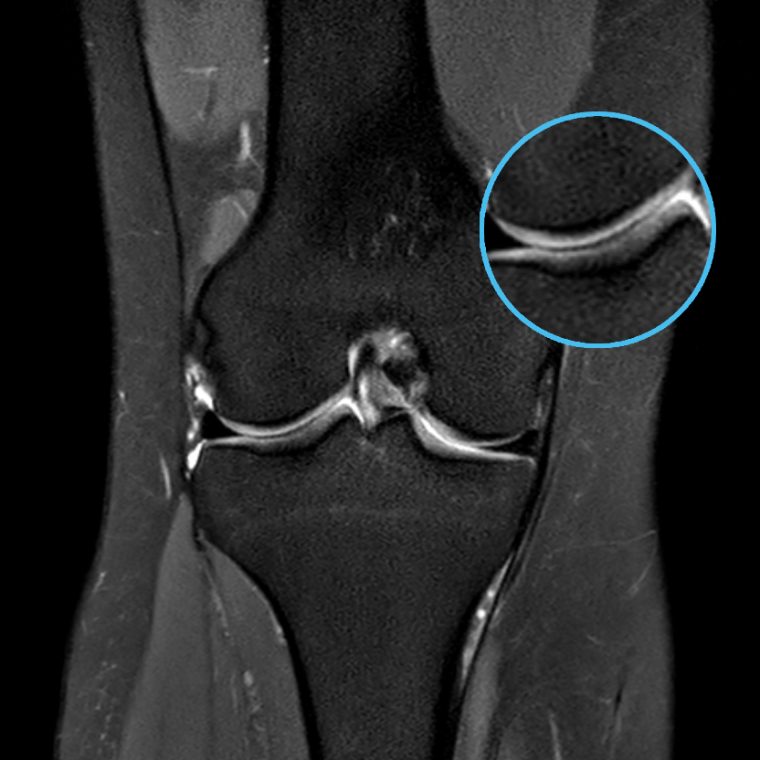

Example images and scan times provided by the software manufacturer (AIRS Medical). They illustrate how the software works and are not images of a patient treated at St. Luke’s Hospital. Actual scan time varies with the study requested, the body area examined, and the individual patient.
Treatment planning at St. Luke’s Hospital
Your evaluation may include:
- Review of symptoms, previous treatment, and activity limitations
- Review of MRI, X-ray, and available medical records
- Assessment of cartilage damage, osteoarthritis severity, and knee alignment
- Discussion of appropriate non-surgical and surgical options
- Rehabilitation planning when treatment is clinically appropriate
- Discussion of the surgical team and the procedure planned for your knee
Our team can help international patients coordinate appointments and diagnostic testing, arrange English interpretation, issue English medical records or certificates when needed, and discuss online follow-up after returning home. Our outpatient clinic is open every day of the year, including weekday evenings, weekends, and public holidays, which allows appointments and imaging to be scheduled within a short visit. Because both MRI and radiology reading are available on site, imaging and the treatment discussion can often be completed within the same visit. The hospital is located beside Exit 1 of Bulgwang Station on Seoul Subway Lines 3 and 6.
Rehabilitation is part of the treatment plan.
Recovery guidance is individualized and may include activity modification, supervised rehabilitation, and follow-up imaging or clinical review. International patients can receive coordination support before, during, and after their visit.
Rehabilitation at St. Luke’s Hospital is provided through a rehabilitation-focused ward and one-to-one sessions with experienced manual and physical therapists. For patients returning home, the team prepares a written rehabilitation program and can review progress and follow-up imaging remotely. Home-visit rehabilitation after discharge is also available for patients staying in Korea.

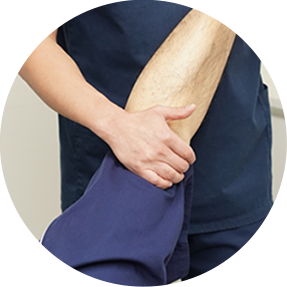
What the arthroscope showed, before and after
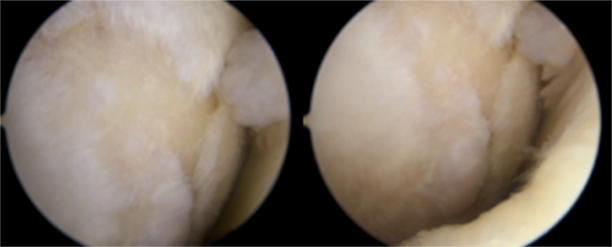
In the three patients below, the knee was examined with an arthroscope before treatment and again at a later procedure. Each pair of photographs is from the same patient and the same knee, and is published with that patient’s consent. Healthy joint cartilage appears smooth and glossy. Damaged cartilage looks frayed and uneven, and where a defect is deep, the bone underneath is exposed.
Woman, 56 · degenerative osteoarthritis of the knee
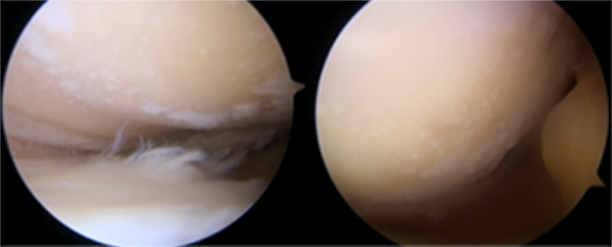
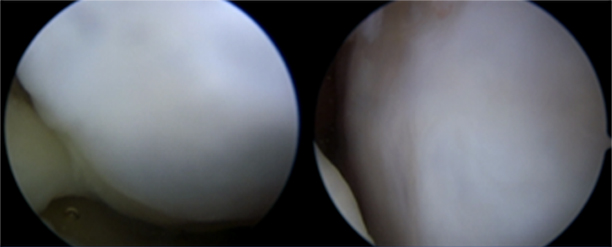
Before treatment the cartilage surface was frayed and uneven. At the follow-up examination the same area appeared smooth and covered.
Woman, 58 · degenerative osteoarthritis of the knee
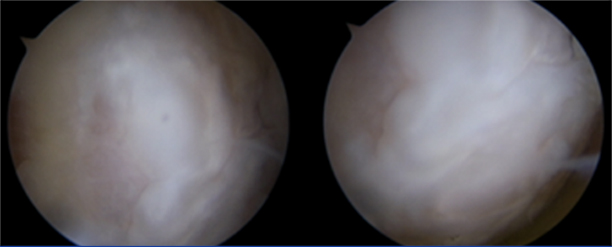
This patient was examined again five years after treatment. The treated surface was still covered at that point.
Woman, 57 · degenerative osteoarthritis of the knee
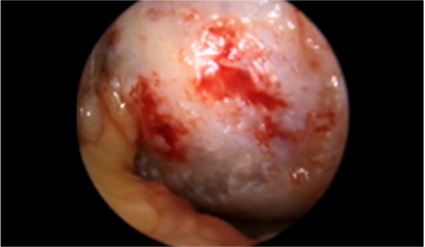
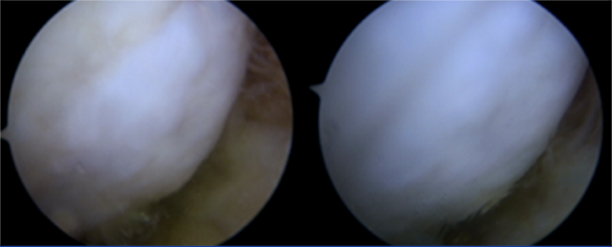
Before treatment the cartilage was worn through in part of the defect and the bone underneath was exposed. At the follow-up examination the defect was covered.
These photographs are of patients treated at St. Luke’s Hospital and are published with their consent. Arthroscopy shows how the joint surface looks at one moment; on its own it does not establish the type or the durability of the tissue that formed. Outcomes differ between patients, side effects such as pain or swelling can occur, and any treatment decision requires an in-person assessment by an orthopedic specialist. CARTISTEM® is approved in the Republic of Korea and these patients were treated in Korea under that approval.
Benefits, limitations, and alternatives
Every treatment option has potential benefits, limitations, and risks.
CARTISTEM® may be considered as part of a joint-preservation strategy for selected patients. However, it does not guarantee cartilage restoration, pain relief, avoidance of joint replacement, or a specific recovery timeline.
Each of the options below is available at St. Luke’s Hospital. This means the consultation can focus on which approach best suits your knee, rather than on which treatments the hospital is able to provide.
Possible alternatives may include:
- Exercise therapy and rehabilitation
- Weight-management and activity modification when appropriate
- Medication or injection-based treatment
- Arthroscopic or cartilage procedures
- Osteotomy in selected alignment-related cases
- Joint replacement surgery when clinically appropriate
The most appropriate option depends on your individual condition.
A patient information sheet summarising these options — what each one does, who it may be considered for, and what it does not do — is available to read before your consultation.
Understanding your options (PDF)Where CARTISTEM® stands in global clinical development
CARTISTEM® has been approved in Korea since 2012 and is in late-stage clinical development in Japan and the United States. The milestones below are as reported by the manufacturer, MEDIPOST, and each entry links to the original announcement so that you can read the primary source.
- January 2012 · Korea
Market approval by the Korean MFDS
CARTISTEM® received market approval from Korea’s Ministry of Food and Drug Safety for the approved Korean indication described in the product information. According to the manufacturer, more than 36,000 patients in Korea had been treated with CARTISTEM® as of June 2026.
Source: manufacturer announcement, June 2026 →Download summary (PDF) - May 2026 · Japan
Phase 3 trial met its primary and secondary endpoints
The manufacturer reported that its Japan Phase 3 trial — 130 participants across 13 sites, followed for 52 weeks, with hyaluronic acid as the active control — met all primary and secondary endpoints, including the WOMAC pain and function index (p<0.0001) and ICRS cartilage grade (p=0.0002). Serious adverse events reported during the study were assessed as having no causal relationship to CARTISTEM®.
Read the announcement →Download summary (PDF) - June 2026 · United States
FDA agreement on the U.S. Phase 3 study design
The manufacturer announced that the U.S. Food and Drug Administration agreed to a single pivotal Phase 3 study, supported by confirmatory evidence from earlier trials and real-world data, as the basis for a future Biologics License Application (BLA). An agreement on study design concerns how the trial is conducted; it is not a decision on approval.
Read the announcement →Download summary (PDF) - July 2026 · United States
First U.S. participant treated in the Phase 3 trial
The manufacturer reported that the first participant in the U.S. Phase 3 trial had been treated. The study is enrolling adults aged 18–75 with symptomatic cartilage defects due to knee osteoarthritis and is registered on ClinicalTrials.gov.
Read the announcement →Trial record: NCT07339111 →Download summary (PDF)About the U.S. trial (PDF)
Where the U.S. trial is running17 sites
These are the study sites listed on the public registry record for NCT07339111, as recorded on 26 May 2026. St. Luke’s Hospital is not a site in this trial. Treatment at our hospital is provided under the Korean approval and is not part of the U.S. study. Listing these institutions does not imply that they endorse, or are affiliated with, St. Luke’s Hospital.
- Flourish Research BirminghamBirmingham, Alabama
- AZ OrthopedicTempe, Arizona
- TriWest Research AssociatesEl Cajon, CaliforniaNot yet recruiting
- Horizon Clinical ResearchLa Mesa, CaliforniaNot yet recruiting
- Source HealthcareSanta Monica, California
- Orthopedic Centers of ColoradoParker, Colorado
- Steamboat Orthopaedic and Spine InstituteSteamboat Springs, Colorado
- Curalta Clinical TrialsWestwood, New Jersey
- Atrium Health MercyCharlotte, North CarolinaNot yet recruiting
- West Clinical ResearchMorehead City, North Carolina
- University of Cincinnati Department of Orthopaedic SurgeryCincinnati, Ohio
- The Ohio State University Jameson Crane Sports Medicine InstituteColumbus, Ohio
- Zenos Clinical ResearchDallas, Texas
- Memorial Hermann CenterHouston, Texas
- HD Research Corp.Houston, Texas
- Flourish Research San AntonioSan Antonio, Texas
- JBR Clinical ResearchSalt Lake City, Utah
Sites and their recruitment status change during a study. Check the current list on ClinicalTrials.gov →
What this does and does not mean
CARTISTEM® is approved in Korea. It is not approved for commercial use in the United States or in Japan. Progress in clinical development, including an agreed trial design, does not indicate that regulatory approval will be granted, and no regulatory outcome can be predicted.
Clinical trial results describe outcomes observed in a study population under defined conditions. They do not predict the result of treatment in any individual patient.
Treatment at St. Luke’s Hospital is provided within the Korean approved indication, following an individual orthopedic assessment. Regulatory availability and treatment eligibility vary by country and should be confirmed before making treatment decisions.
Reviews of the hospital
2,360 public patient reviews on Google, Naver and Kakao Map
These reviews are about the hospital as a whole, not about this treatment. Figures as of 7 September 2026, counted on each platform. Naver lists visitor reviews and rated reviews as two separate sets on the same page, and both are included here. Review volume and platform ratings describe how patients rated their overall experience. They are not a measure of treatment outcomes, which differ between individuals.
Before you request a medical review
Please share the following when available:
- MRI or X-ray images and reports
- A summary of your symptoms and treatment history
- Previous surgery, injection, or rehabilitation information
- English medical records or a translated summary
- Your preferred timing for a visit to Seoul
Frequently asked questions
Is CARTISTEM® suitable for every patient with knee osteoarthritis?
No. Suitability depends on cartilage status, osteoarthritis severity, knee alignment, symptoms, imaging, general health, and other individual factors.
Can I send MRI images before visiting Korea?
Yes. You may share available MRI, X-ray, and medical-record information when requesting a medical review.
Can an online review confirm treatment?
No. A preliminary review can help plan a visit, but the final decision requires in-person evaluation and discussion of risks, limitations, and expected recovery.
Does CARTISTEM® guarantee cartilage regeneration or avoid joint replacement?
No. Outcomes vary. CARTISTEM® is considered only after individual assessment, and no treatment can guarantee a specific result.
What is rehabilitation for?
Rehabilitation supports recovery after surgery and is planned around your procedure and clinical progress. Weight-bearing and activity guidance are individualized.
How are treatment costs provided?
Treatment costs are not listed publicly. They are discussed individually after medical review and consideration of appropriate options.
Who performs the procedure?
The procedure is performed by an orthopedic specialist from our Joint Center who also carries out your assessment and reviews your imaging, so the surgical plan and the clinical assessment stay with the same team.
What happens if CARTISTEM® is not suitable for me?
Our Joint Center also provides non-surgical care, injection-based treatment, arthroscopic and cartilage procedures, osteotomy, and joint replacement. If CARTISTEM® is not clinically appropriate, your specialist will explain which alternatives may be considered and why.
How is care arranged for patients traveling from abroad?
Our international coordinators arrange appointment scheduling, English interpretation, and English medical documentation, and can propose a visit schedule after the initial medical review. The estimated length of stay and rehabilitation plan are confirmed by the treating specialist, as they depend on the procedure performed and on your individual recovery.
This page provides general information and does not replace an in-person medical consultation, diagnosis, or treatment recommendation. Final treatment decisions are made by the treating orthopedic specialist after individual assessment.
Outcomes vary between patients. Your care team should explain the treatment rationale, potential benefits, limitations, risks, alternatives, expected rehabilitation, and the information needed before you decide. Explore clinical evidence
Last updated: September 2026