Patient testimonials
Individual patient experiences, in their own words.
What do the patient interviews show?
Nine patients treated for degenerative knee osteoarthritis describe their own experience in their own words, recorded in Korean. Alongside them are imaging and arthroscopic photographs from individual cases. These are individual experiences and do not indicate what another patient should expect. Select a story to play the video on this page.
Bone marrow injection
Interviews from patients treated with bone marrow aspirate concentrate (BMAC) — prepared from the patient’s own bone marrow in the operating room on the day of the procedure. The short clips and the MRI comparison below belong to this group.Compare with CARTISTEM® →
- 38-year-old male, Grade 2 degenerative osteoarthritis, from the United Kingdom
- Knee pain for 20 years
- Able to walk freely after treatment
Play the video · 5:17

- 72-year-old female, Grade 3 degenerative osteoarthritis
- Received bone marrow aspirate concentrate (BMAC) injection treatment
- Had previously received stem cell treatment at another hospital
Play the video · 6:46

- 62-year-old female, Grade 2 degenerative osteoarthritis
- Had undergone repeated hyaluronic acid injections
Play the video · 3:27

- 61-year-old male, Grade 3 degenerative osteoarthritis
- In a vegetative state for three weeks after an accident, and could not undergo knee surgery
- Had received injections and medication for four to five years
Play the video · 3:49

- 71-year-old male, Grade 3 degenerative osteoarthritis
- Had been advised to consider total knee replacement
- Previously tried acupuncture, heat therapy and nine to ten injections
Play the video · 4:59

- 53-year-old male, Grade 2 degenerative osteoarthritis
- Knee pain increased with delivery work
- Found stair climbing easier after the injection
Play the video · 6:27

- 60-year-old female, Grade 2 degenerative osteoarthritis
- Symptoms worsened over about four months
- Steroid injections had not relieved the symptoms
Play the video · 6:56

- 83-year-old male, Grade 2 degenerative osteoarthritis
- Could not cross his legs before treatment
- Had received hyaluronic acid injections
- Had been advised to consider total knee replacement
Play the video · 5:20

Short clips
Brief excerpts from the interviews on this page, recorded in Korean.






One patient’s knee MRI before and after a bone marrow injection
The two studies below are from the same patient, taken before treatment and again two years later, and are published with that patient’s consent. Both were acquired on the same 1.5T MRI system at St. Luke’s Hospital.
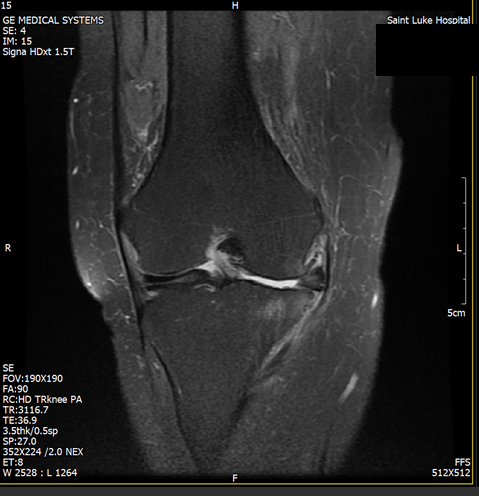
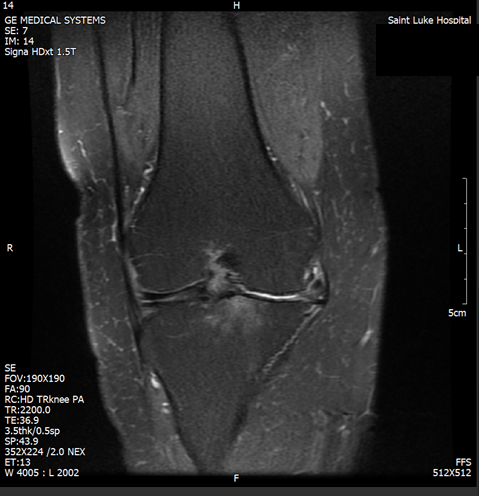
Shaded in gold: the bright, high-signal area at the joint line, outlined the same way on both studies. Move your cursor over an image to magnify it — on a touch screen, press and hold.
How the treating team read these images
- The abnormally bright space between the joint surfaces is reduced compared with the earlier study.
- The area where cartilage had been lost appears filled in on the later study.
- The change was still visible on imaging at the two-year point.
This is the imaging of a single patient, published with consent and with identifying details removed. It shows one individual’s course and does not represent a typical or expected result. Outcomes differ between patients, side effects such as pain or swelling can occur, and any treatment decision requires an in-person assessment by an orthopedic specialist. About bone marrow injection
CARTISTEM®
A different treatment from the interviews above. CARTISTEM® is an allogeneic umbilical cord blood-derived cell therapy product approved in Korea and applied during surgery — not a same-day injection of the patient’s own bone marrow.Compare with bone marrow injection →
- 56-year-old female, Grade 3 degenerative osteoarthritis
- Treated with CARTISTEM®, applied surgically during arthroscopy
- Severe knee pain before treatment
Play the video · 7:15

What the arthroscope showed in this patient
The same knee, examined with an arthroscope before treatment and again at a follow-up procedure one year later. Published with this patient’s consent. Healthy joint cartilage appears smooth and glossy; damaged cartilage looks frayed and uneven.
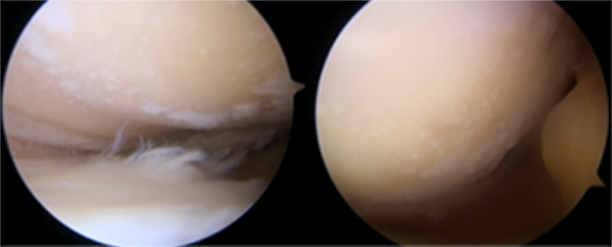
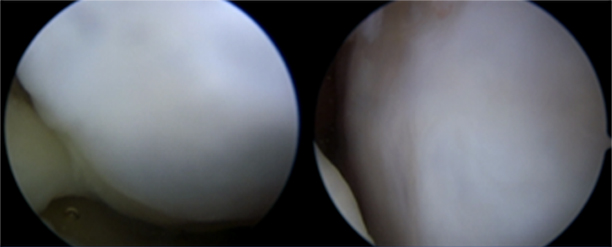
Treated January 2020 · follow-up arthroscopy August 2021.
Two other patients treated with CARTISTEM®
Neither of the two cases below is Ms. Son. Each is a different patient, examined with an arthroscope before treatment and again at a later follow-up procedure, and published with that patient’s consent.
Woman, 58 · degenerative osteoarthritis of the knee
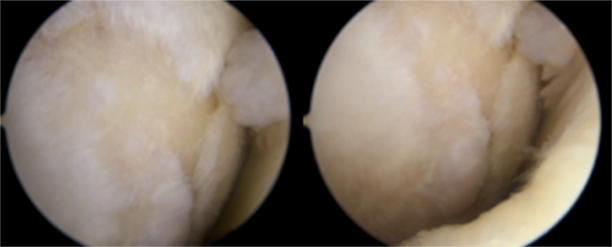
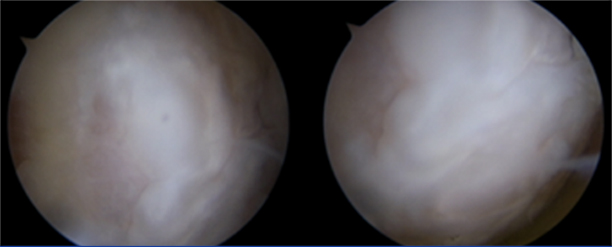
This patient was examined again five years after treatment. The treated surface was still covered at that point.
Woman, 57 · degenerative osteoarthritis of the knee
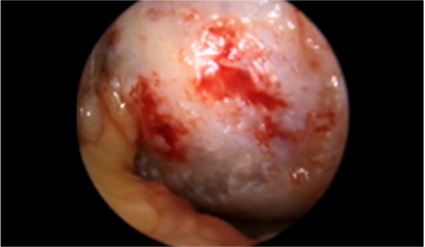
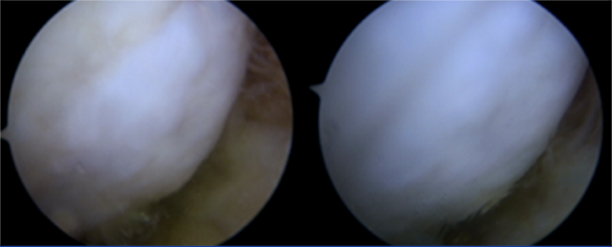
Before treatment the cartilage was worn through in part of the defect and the bone underneath was exposed. At the follow-up examination the defect was covered.
These photographs show the course of individual patients and do not represent a typical or expected result. Outcomes differ between patients, and any treatment decision requires an in-person assessment by an orthopedic specialist. More arthroscopic findings
How to read this page
These are individual patient experiences and do not guarantee results for other patients. Outcomes vary, and any treatment decision requires an in-person assessment by an orthopedic specialist.